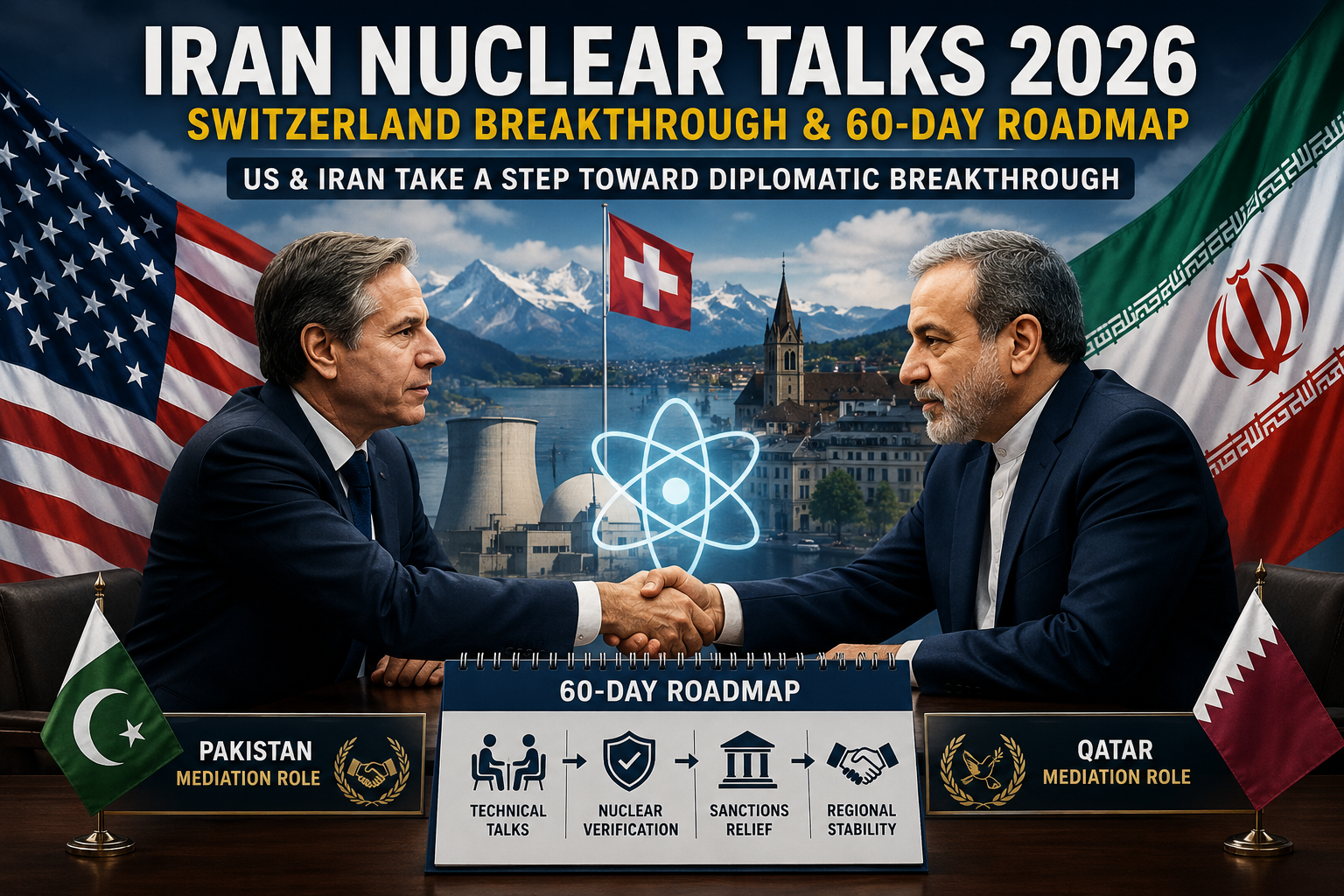
The Iran Nuclear Talks 2026 have become one of the most significant geopolitical developments of the year. After the United States and Iran agreed on a structured 60-day roadmap during high-level negotiations held in Switzerland. This breakthrough has drawn global attention because it signals a possible shift from long-standing hostility and stalled diplomacy. Toward a more structured and cooperative negotiation process. The talks are centered on Iran’s nuclear program, international sanctions, and regional stability in the Middle East. Making the Iran Nuclear Talks 2026 a highly searched and trending topic in global news and political analysis. With the involvement of key mediators such as Pakistan and Qatar, the discussions gained additional diplomatic weight. As both countries helped facilitate communication and reduce mistrust between the two sides in a neutral environment.
60-Day Nuclear Roadmap
The Switzerland meeting was designed as a carefully controlled diplomatic engagement. It is the point where both parties could resume dialogue without immediate pressure to finalize a comprehensive agreement. Instead of rushing into a final deal, both the United States and Iran agreed on a gradual. Step-by-step negotiation framework that is now officially defined as a 60-day roadmap. This roadmap is considered the most important outcome of the Iran Nuclear Talks 2026. It outlines a structured path for future negotiations including technical discussions, policy reviews, and compliance assessments. Under this plan, expert-level working groups from both sides will continue detailed conversations focusing on Iran’s nuclear enrichment levels, verification mechanisms, and conditions under which phased sanctions relief could be considered. Although no final nuclear agreement has been signed yet. The establishment of this roadmap is widely seen as a positive diplomatic development compared to previous failed negotiation attempts.
Another important dimension of the Iran Nuclear Talks 2026 is the increasing role of regional mediators. Especially Pakistan and Qatar, who acted as neutral facilitators during the Switzerland negotiations. Their involvement helped create a balanced diplomatic atmosphere where both parties could communicate indirectly with greater confidence and reduced political pressure. Analysts believe that without this mediation effort, achieving even a structured roadmap. It would have been significantly more difficult due to years of mistrust between the United States and Iran. Switzerland was chosen as the venue due to its long-standing neutrality in international conflicts. Which provided a secure and stable environment for sensitive diplomatic discussions. This careful selection of location and mediators contributed significantly to the progress achieved during the talks.
Global Impact of Iran Nuclear Talks 2026
From an international perspective, the Iran Nuclear Talks 2026 carry major implications for global politics, energy markets, and regional security. Any progress or failure in these negotiations can directly influence oil prices, international trade stability, and geopolitical tensions in the Middle East. If the 60-day roadmap leads to a successful agreement, it could open the door to phased sanctions relief, improved economic conditions for Iran, and increased stability across the region. This could also positively impact global energy supply chains by reducing uncertainty in oil-producing regions. On the other hand, if negotiations fail, tensions may rise again, potentially resulting in increased sanctions, market instability, and renewed geopolitical friction. Because of these high stakes, governments, investors, and international organizations are closely monitoring every development related to the Iran Nuclear Talks 2026.
Looking ahead, the next 60 days are expected to be extremely critical in determining the future of these negotiations. Technical committees from both countries will continue regular meetings to address complex issues such as nuclear verification protocols, enrichment limits, monitoring systems, and sanctions compliance frameworks. A joint monitoring mechanism is also expected to oversee progress and ensure transparency throughout the negotiation process. While challenges remain due to deep-rooted political mistrust and external pressure from various regional stakeholders, the current phase of dialogue under the Iran Nuclear Talks 2026 is being considered one of the most promising diplomatic efforts in recent years. The success or failure of this roadmap will likely decide whether this initiative becomes a historic nuclear agreement or another stalled attempt in the long history of US–Iran relations.