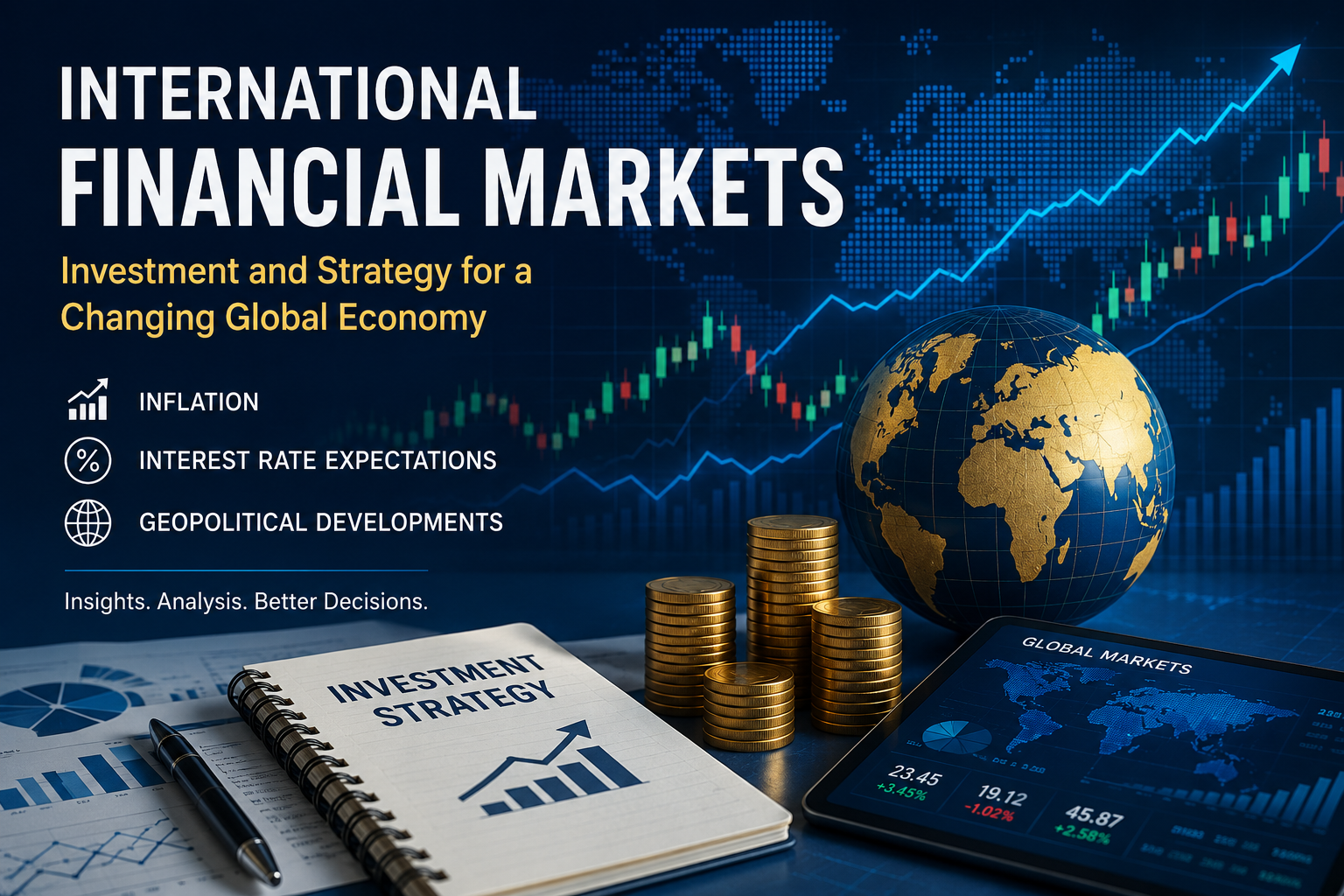
International financial markets play a crucial role in connecting economies, businesses, and investors across the world. These markets include stock exchanges, bond markets, foreign exchange markets, and commodity markets that influence global economic growth. As inflation, interest-rate expectations, and geopolitical developments continue to shape financial conditions, having a strong investment strategy has become essential for investors seeking long-term financial success and stability.
The Impact of Inflation on Financial Markets
Inflation directly affects the value of money, consumer spending, and business profitability. When inflation rises, central banks often increase interest rates to stabilize prices, making borrowing more expensive for businesses and individuals. These changes influence stock prices, bond yields, and currency values. During periods of economic uncertainty, developing a well-planned investment strategy helps investors manage risks and make informed financial decisions.
Interest Rates and Investor Decisions
Interest rates are one of the most closely monitored indicators in international financial markets. Higher interest rates generally reduce consumer spending and business investments, while lower rates encourage borrowing and economic expansion. Investors carefully analyze monetary policy announcements before adjusting their portfolios. A disciplined investment strategy allows individuals and institutions to respond effectively to changing market conditions and protect their financial goals.
Geopolitical Events and Market Volatility
International conflicts, trade disputes, political instability, and economic sanctions often create uncertainty across financial markets. These geopolitical developments can lead to sudden fluctuations in stock markets, commodity prices, and exchange rates. During periods of increased volatility, many investors diversify their portfolios to reduce risk. Building a flexible investment strategy enables investors to adapt to market changes while maintaining long-term growth opportunities.
The Future of International Financial Markets
Technology continues to transform global financial markets through artificial intelligence, digital trading platforms, and real-time data analysis. Despite these advancements, inflation trends, central bank decisions, and geopolitical developments will remain key factors influencing market performance. Investors who focus on continuous learning and maintain a balanced investment and strategy are more likely to navigate uncertainty successfully and achieve sustainable financial growth.
Conclusion
International financial markets remain the foundation of global economic growth, influencing businesses, investors, and economies worldwide. As inflation, interest rates, and geopolitical developments continue to shape market conditions, staying informed is more important than ever. Adopting a smart investment strategy helps investors manage risks, seize new opportunities, and build long-term financial stability in an ever-changing global economy.