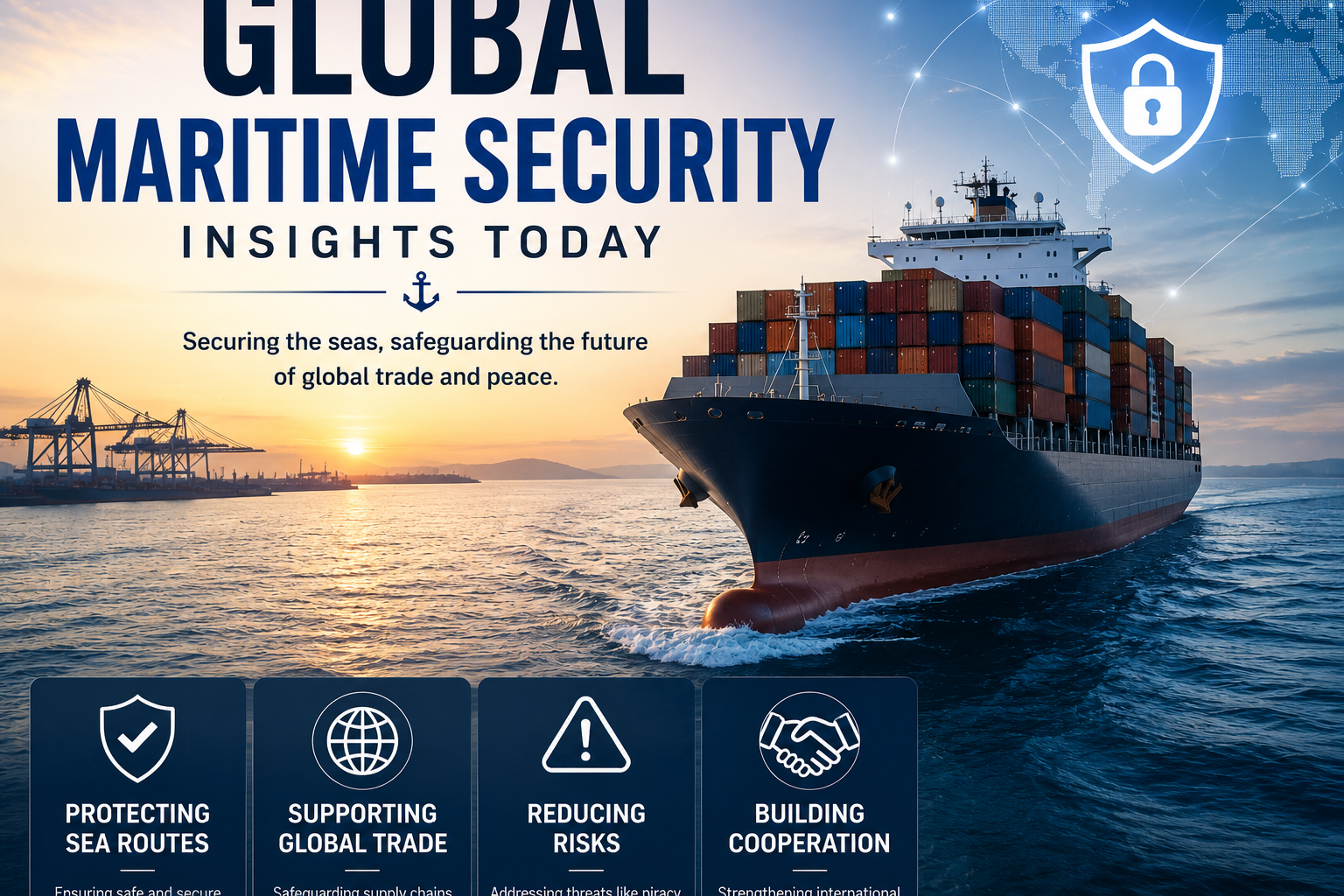
As far as the global trade is concerned, the sea lanes play the central role. The maritime sector is responsible for transporting more than 80% of all world’s merchandize. Daily hundreds of freighters carry different goods including foodstuffs, fuel products, electronics and medications. Therefore, global shipping lanes represent the main artery of international economy. Besides, increasing importance of global trade requires additional protection and efficiency of maritime routes. Global maritime security contributes to safety and uninterrupted work of shipping lanes. Otherwise, international trade disruptions will significantly affect businesses and consumers worldwide.
Importance of Global Maritime Security
It goes without saying that the Gulf region is one of the most strategically important corridors. This area transports crude oil, liquefied natural gas (LNG), and commercial cargo.. Disruption of trade corridor will have an adverse effect on international markets. The process will lead to increases in transportation costs, insurance premiums, shipping time. For this reason, increasing the level of maritime security becomes the priority goal of governments, navies and shipping enterprises.
Challenges Facing Global Shipping
Contemporary maritime shipping industry faces various challenges. Traditional risks associated with naval conflicts become secondary in comparison with such factors as geopolitical tension, attacks on commercial vessels, piracy and cyberattacks. Modern navigation system raises the problem of cybersecurity in the context of shipping. Therefore, it becomes obvious that the development of maritime security measures should be continuous and constant.
Economic Effects of Disruptions in Shipping Lanes
Shipping disruptions have a negative impact on economic interests of countries worldwide. In order to evade potentially dangerous zones, vessels have to make detours and therefore spend additional resources including fuel.It raises operating costs, which increases the prices of goods and services.
. The market of energy is particularly vulnerable because most of oil and LNG in the world pass through the Gulf region.
International Cooperation for Maritime Security
International cooperation, naval exercises, intelligence sharing and exchange between countries contribute to the development of global maritime security. Satellite surveillance and modern monitoring systems allow increasing the level of security. Shipping enterprises also invest in cybersecurity measures, professional staff training and state-of-the-art navigation systems. All these measures allow decreasing operating risks for shipping vessels.
In the course of time, the protection of international shipping routes will still be relevant. . Increase in global trade volume is expected in the nearest future. Moreover, technological developments such as artificial intelligence, autonomous surveillance systems and real-time satellite monitoring will improve maritime industry. Nevertheless, technological developments cannot provide safe shipping lanes without diplomatic initiatives and international cooperation.
Conclusion
Global maritime security plays the crucial role in global trade, energy supplies and economy. Learn more about shipping safety . The situation when geopolitical tensions and risks associated with new technologies are constantly developing demands the increase in maritime security. International cooperation, innovations and diplomatic initiatives will increase resilience of global economy in the future.