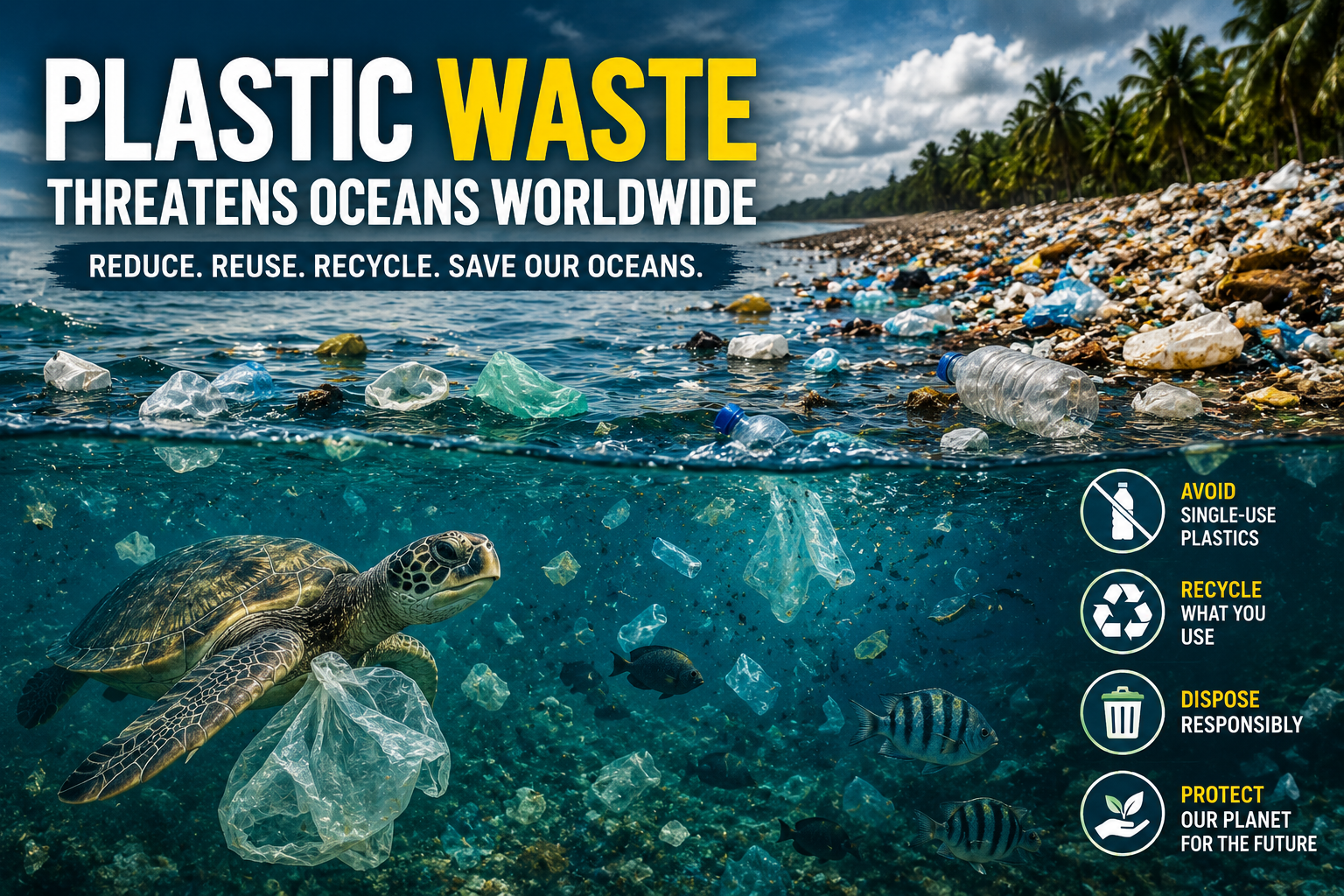
Plastic pollution continues to threaten oceans worldwide, creating serious environmental, economic, and public health concerns. Every year, millions of tons of plastic waste enter rivers, seas, and oceans, where it harms marine ecosystems and endangers countless species. Environmental organizations are urging governments, businesses, and individuals to take stronger action before the problem becomes even more severe.
How Plastic Waste Reaches the Ocean
Most ocean pollution comes from improperly managed plastic waste, littering, and single-use plastic products. Rainfall, rivers, and stormwater systems carry discarded materials into waterways, eventually reaching the sea. Fishing gear, plastic packaging, bottles, and bags are among the most common forms of marine debris found along coastlines and in deep ocean waters.
Impact on Marine Life
Marine animals often mistake plastic for food or become trapped in discarded materials. Sea turtles, whales, dolphins, seabirds, and fish can suffer injuries, starvation, or death after swallowing plastic or becoming entangled in abandoned fishing equipment. Scientists also warn that tiny plastic particles, known as microplastics, are now present throughout marine ecosystems because of increasing plastic waste.
Economic and Environmental Consequences
Plastic pollution affects more than wildlife. Coastal tourism, commercial fishing, and shipping industries face increasing costs due to polluted beaches and damaged marine habitats. Cleaning oceans and coastlines requires significant financial resources, while uncontrolled plastic waste reduces biodiversity and weakens the natural environmental balance.
Global Efforts to Reduce Pollution
Many countries are introducing bans on single-use plastics, encouraging recycling programs, and investing in sustainable packaging. Environmental groups continue organizing beach cleanups, educational campaigns, and conservation projects to reduce pollution entering oceans. Businesses are also exploring biodegradable materials and environmentally friendly alternatives to traditional plastic products.
What Individuals Can Do
Everyone can help protect oceans by taking simple actions:
- Use reusable shopping bags and water bottles.
- Avoid single-use plastic products whenever possible.
- Recycle household materials correctly.
- Participate in local cleanup campaigns.
- Support environmentally responsible businesses.
- Spread awareness about ocean conservation.
These small actions can significantly reduce plastic waste and help keep marine ecosystems clean.
Conclusion
Plastic pollution remains one of the greatest threats to the world’s oceans. However, governments, industries, communities, and individuals can work together to reduce plastic waste and protect marine ecosystems. By making sustainable choices today, we can help preserve cleaner oceans and a healthier planet for future generations.