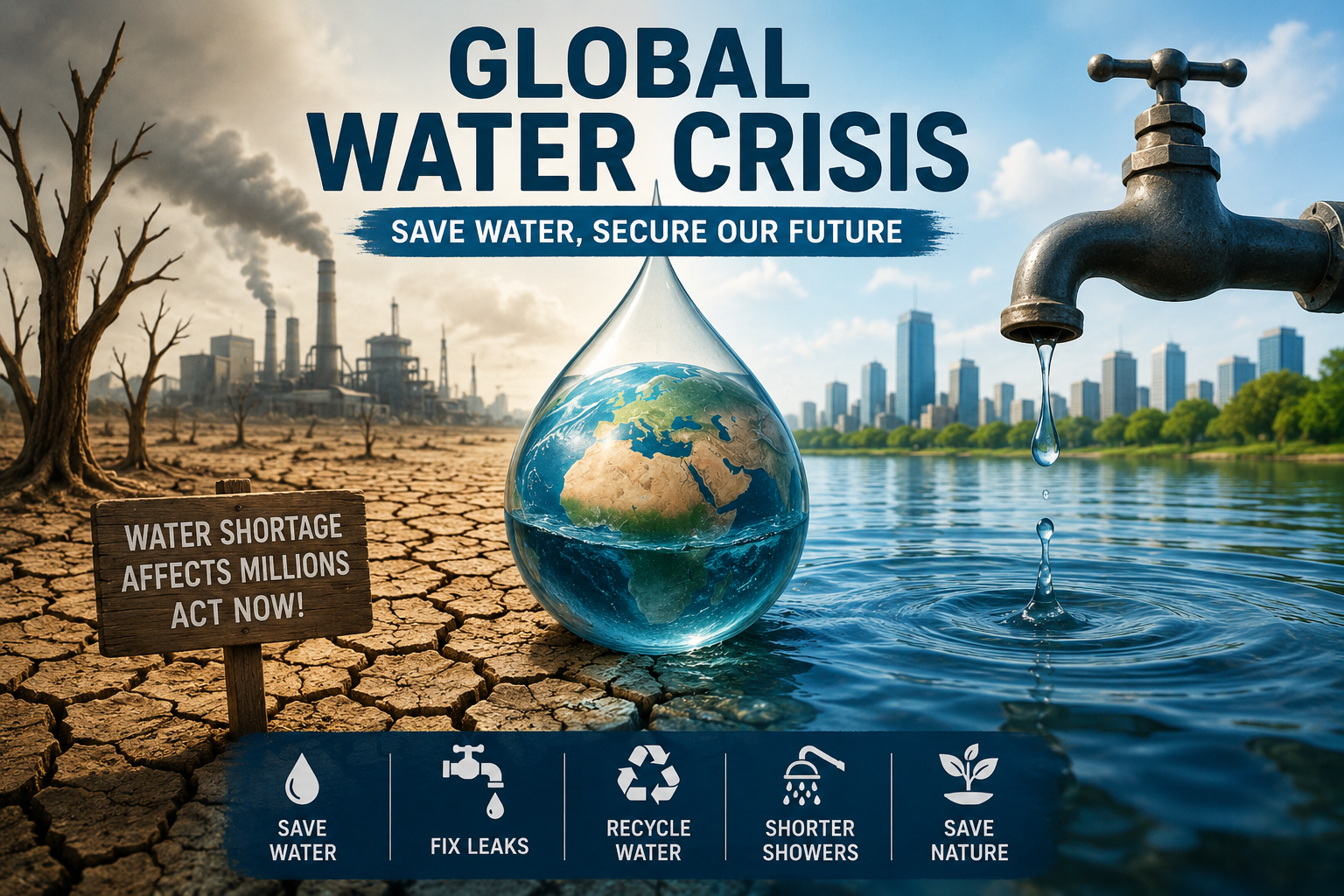
The global water crisis has become one of the biggest environmental and humanitarian challenges facing the world in 2026. Climate change, rapid population growth, pollution, and increasing demand for freshwater have placed enormous pressure on water resources. Millions of people already struggle with water shortage, while experts warn that the situation could worsen if immediate action is not taken.
Why Is the Global Water Crisis Growing?
Several factors are contributing to the worsening water shortage across the world. Rising temperatures have increased evaporation from rivers and lakes, while prolonged droughts continue to reduce water supplies. In addition, expanding cities and growing industries consume more freshwater every year.
Poor water management, aging infrastructure, and pollution from agriculture and factories also reduce the amount of clean water available for communities.
Countries Facing Severe Water Shortages
Many countries across Africa, the Middle East, Asia, and parts of Europe are experiencing serious water shortage conditions. Farmers are struggling to irrigate crops, households face limited access to safe drinking water, and industries are being forced to reduce production because of limited water supplies.
The United Nations has warned that billions of people could face water scarcity during the coming decades if sustainable water management does not improve.
Impact on Food, Health, and Economy
The global water crisis affects far more than drinking water. Limited water supplies reduce agricultural production, increase food prices, and threaten food security. Hospitals and healthcare systems also face challenges where clean water is unavailable. The growing water shortage is also placing additional pressure on businesses and local economies.
Businesses that depend on water for manufacturing, energy production, and agriculture may experience higher costs and lower productivity, affecting economic growth worldwide.
Possible Solutions
Governments and environmental organizations are encouraging countries to invest in sustainable water management. Important solutions include:
- Improving water conservation.
- Expanding wastewater recycling.
- Building modern water infrastructure.
- Protecting rivers, lakes, and groundwater.
- Investing in desalination and rainwater harvesting.
- Promoting responsible water use in homes and industries.
These measures can help reduce water shortage and improve access to clean water for future generations.
Conclusion
The global water crisis is no longer a future concern—it is happening today. Governments, businesses, and individuals must work together to protect freshwater resources, improve water management, and reduce pollution. By taking action now, the world can reduce water shortage and help ensure that future generations have reliable access to safe and clean water.