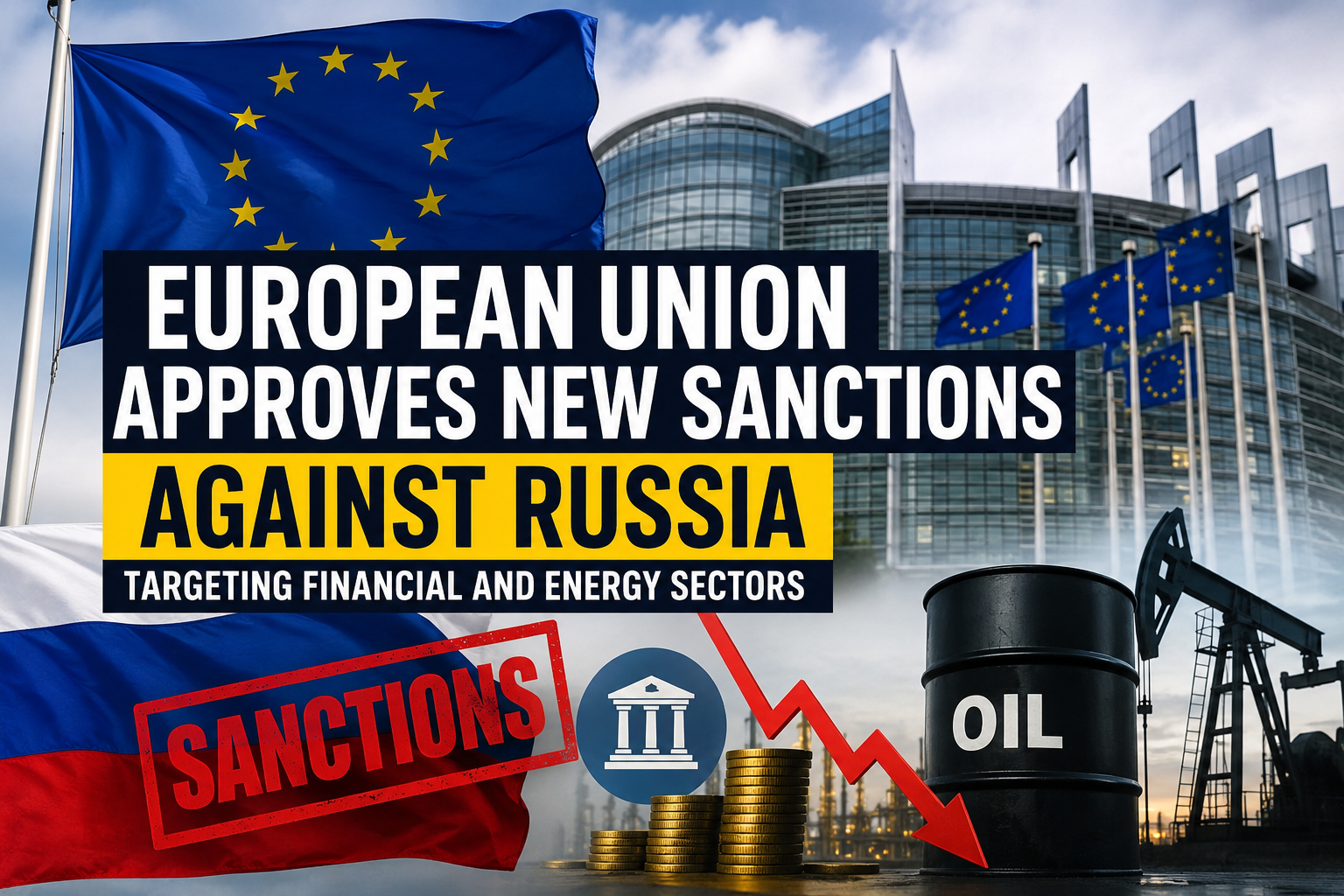
The latest news in European Union says that new sanctions package is approved. It concerns Russia’s financial and energy sectors as part of the measures against Russian activity in Ukraine. EU sanctions update
Features of the Sanctions
The latest sanctions package targets Russian banking, finance and energy sectors. The idea is to restrict Russia’s energy incomes and conduct financial operations with European financial institutions.According to EU officials, this package continues efforts….
News in European Union: Financial Sector Sanctions
There are additional restrictions for Russia’s financial sector included in the new package. Banks and investment companies will find it harder to conduct international transactions and access European markets. It can also affect those companies that need financial relations with Russia and European countries.
Thus, the latest developments suggest that financial pressure remains an essential element of EU’s policy towards Russia. Effectiveness of the sanctions depends on implementation and international cooperation.
European Union News: Energy Sector Restrictions
Energy sector is one of the most profitable for Russia. New measures include tougher restrictions on energy exports and technology transfers. As a result, EU hopes to reduce Russia’s energy incomes.
At the same time, European countries try to diversify their energy resources. These measures can influence global oil and gas market due to changes in supply and prices.
European Union Sanctions: Economic Consequences
Sanctions can cause some economic consequences which are not limited to Europe and Russia. Financial markets react to geopolitical changes and changes in energy supplies. Businesses monitor the situation as there may be changes in supply chain, investments and costs.
Future Outlook for European Union News
Some of allies of the EU have supported the EU’s decision. However, Russia has reacted negatively criticizing sanctions and saying that it would defend its economic interests.
The talks are held despite the tension. Their effectiveness depends on implementation and cooperation.
Future Outlook
In case if geopolitical tension continues, the EU may take additional measures. Cooperation with other countries is crucial for achieving the goals of the sanctions.
Conclusion
The latest EU sanctions show how the bloc uses economic measures as its response to the Ukraine conflict. Growing restrictions are introduced for Russia’s financial and energy sectors. Their consequences will have global influence on markets, energy supplies, diplomatic relations and international economic policies. EU sanctions update