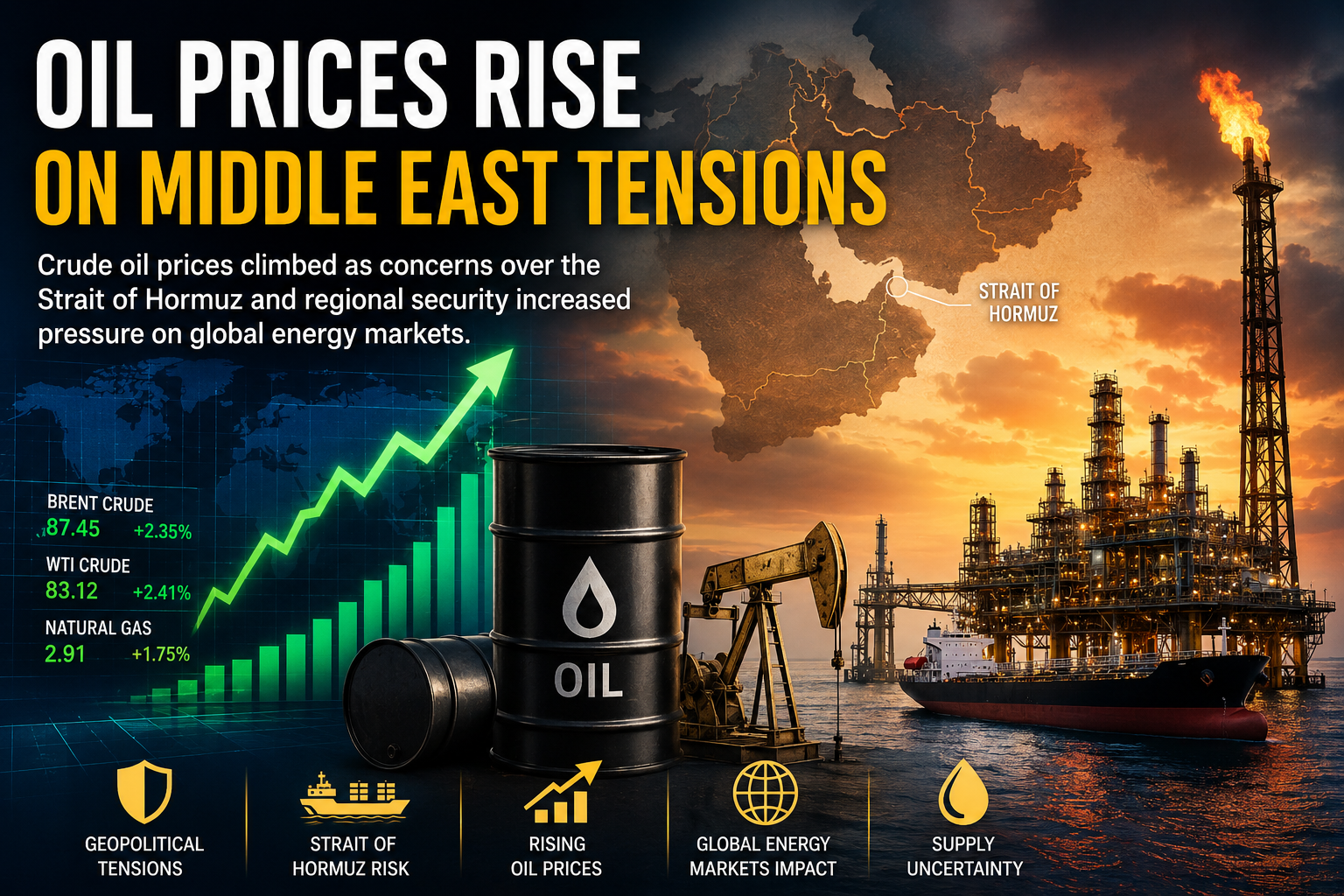
Global oil prices have increased as geopolitical tensions in the Middle East continue to create uncertainty across international energy markets. Investors and governments are closely watching developments around the Strait of Hormuz, one of the world’s most important shipping routes. The latest events have also drawn attention to oil and gas trading, as changes in regional stability can quickly influence global energy prices and supply chains.
Why the Strait of Hormuz Matters
The Strait of Hormuz is one of the world’s most strategic waterways. A large share of global crude oil and liquefied natural gas passes through this narrow passage every day. Countries in the Gulf depend on this route to export energy products worldwide. Any disruption can delay shipments and increase transportation costs. As a result, oil and gas trading becomes more volatile whenever geopolitical tensions rise in the region.
Impact on Global Energy Markets
Higher oil prices affect businesses, consumers, and financial markets around the world. Rising fuel costs increase transportation expenses for airlines, shipping companies, and manufacturers. These costs are often passed on to consumers through higher prices for goods and services. Investors involved in oil and gas trading closely monitor market developments because even small disruptions can lead to significant price fluctuations.
Investor and Government Response
Governments continue to strengthen energy security by expanding strategic oil reserves, encouraging renewable energy projects, and diversifying energy imports. Investors also pay close attention to diplomatic negotiations and regional developments before making decisions. During periods of uncertainty, oil and gas trading becomes highly sensitive to news related to security, production, and international relations.
Long-Term Outlook
Energy experts believe geopolitical risks will continue to influence oil markets for years to come. Although renewable energy is growing rapidly, crude oil remains essential for transportation and industrial production. Stable shipping routes, international cooperation, and peaceful diplomacy are necessary to maintain reliable energy supplies. These factors also help create a more stable environment for oil and gas trading and support long-term market confidence.
Conclusion
The recent increase in oil prices highlights the close relationship between geopolitics and the global economy. Ongoing tensions in the Middle East continue to influence energy markets and investor confidence. Strengthening energy security, improving supply chain resilience, and supporting diplomatic solutions will help reduce future risks. As global demand continues to grow, oil and gas trading will remain a key part of the international energy industry and the world economy.